
haiku poet

Catching up to Bashō

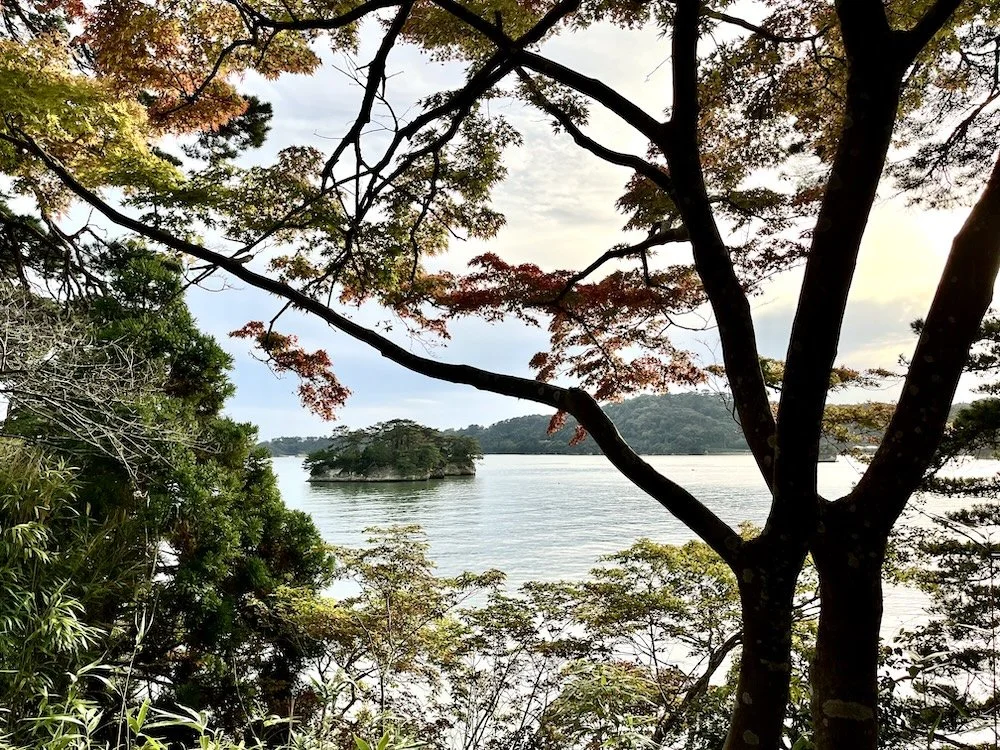
A view of Matsushima Bay in the Tohoku region of Japan, October 2025.

As some of you may recall, last fall I had the great pleasure of traveling to Japan with my husband and son. The highlight was a six-day walking tour tracing part of the route of 17th century haiku poet Bashō.

I’m thrilled that a major haiku journal has published a haiku sequence inspired by the trip. When my husband Paul saw the piece, laid out over two pages, he joked, “You got the centerfold in Modern Haiku!” I’m happy to share it here, with thanks to editor Paul Miller. I’ve added notes below for context.

_________________________
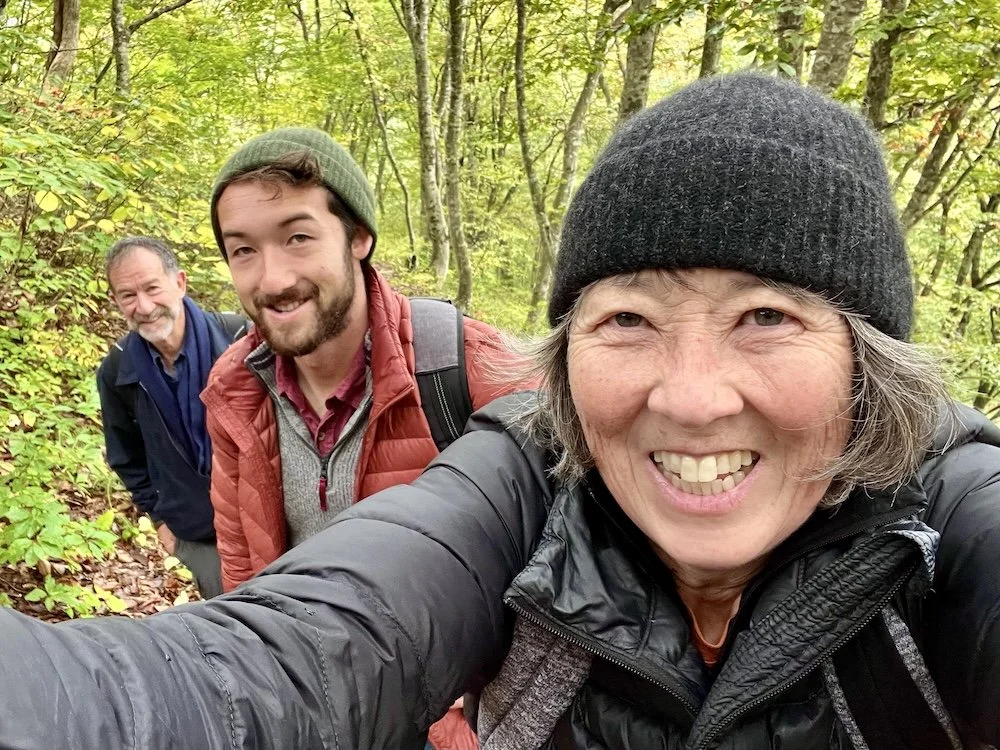
Three travelers hike part of Bashō’s 1689 route.

In Bashō’s Footsteps

three wayfarers
we catch up to Bashō
by bullet train

Narrow Road
everyone driving
on the wrong side

dancing maples
we clap and clap
for bears
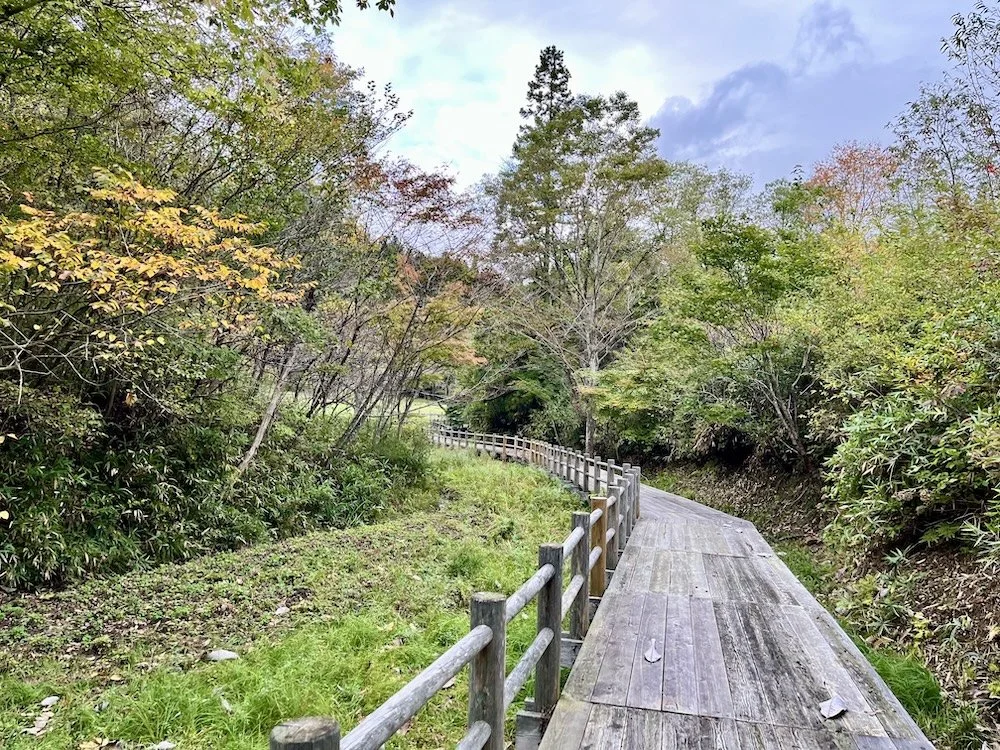
An elevated section of the trail.

all words drown
in its depths . . .
Matsushima Bay

a crow
cawing cawing
smoky hojicha

autumn leaves
Bashō’s dreams
endure in stone
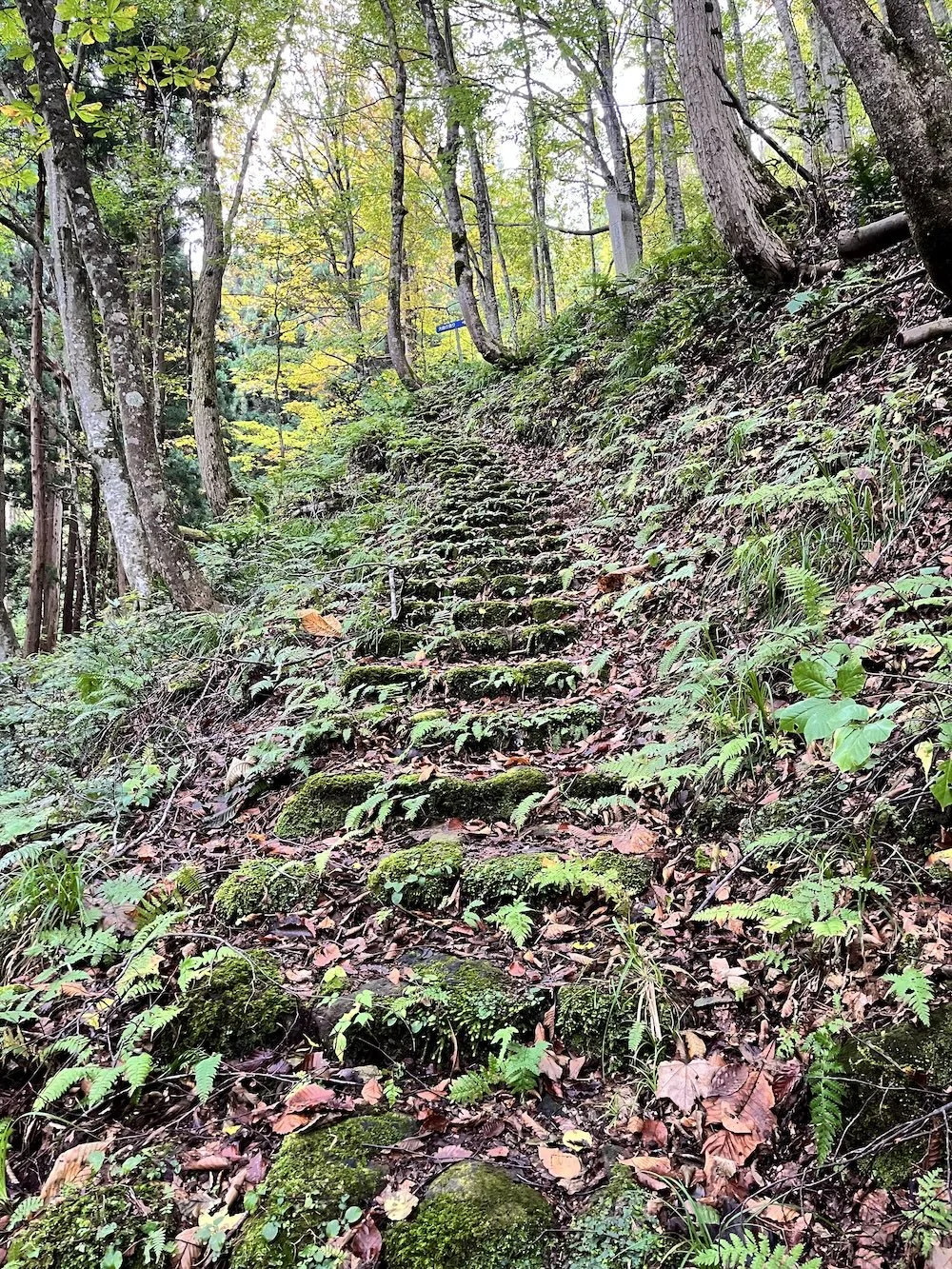
View of the steps leading up to Natagiri Pass.

on his walk too
the rhythm of rain
on bamboo

a little more wear
from our boots
sunken stone steps

a banana tree
waves hello
Bashō museum

straw sandals
how long they last
in the display case

steaming onsen
the long trail
dissolving

NOTES ON VERSES:
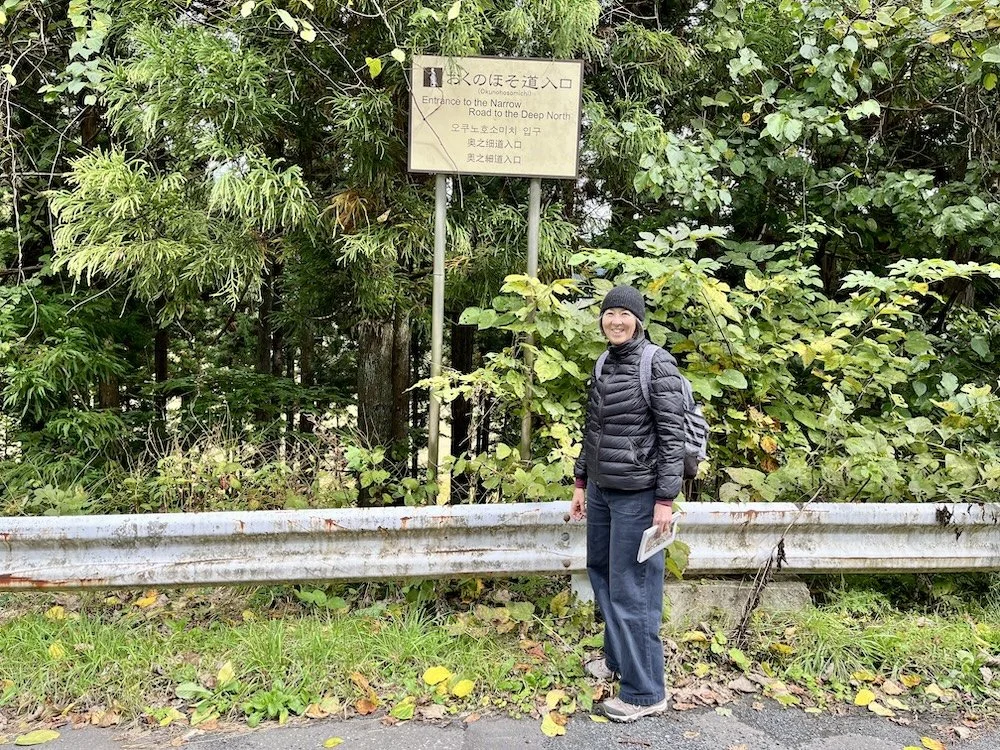
Annette Makino along the route of Bashō’s Narrow Road to the Deep North, October 2025.

“three wayfarers” - My husband, son and I took a bullet train from Tokyo to Sendai, in the rural Tohoku region in the north, where Bashō and his friend and disciple Sora walked over a period of five months in 1689.

“Narrow Road” - Based on his travels, Bashō wrote a very influential travelogue sprinkled with haiku, called Oku-no-hosomichi, or Narrow Road to the Deep North. This verse also plays with the fact that in Japan, people drive on the left.

“dancing maples” - In the Tohoku region of Japan, aggressive bears killed 13 people last year. Signs warn hikers to make noise as they walk, so we often clapped our hands to warn bears away.

“all words drown” - With its hundreds of small pine-covered islands, Matsushima Bay is considered one of the most beautiful places in Japan. Bashō was so overcome that he couldn’t write a single haiku about it.

“a crow” - hojicha is a kind of roasted green tea.

“autumn leaves” - This verse riffs on one of Bashō’s most famous haiku, reflecting on the once-mighty Fujiwara dynasty: “the summer grasses— / all that remains / of a warrior’s dream” (trans. Robert Hass). This poem is engraved on a stone monument near the site where Bashō wrote it.

“on his walk too” - The fall weather was mostly lovely, but we had a bit of rain on our walking tour. Glad we had better raincoats than the straw cape Bashō wore!

“a little more wear” - Part of the walking tour involved climbing a steep mountain pass via some very worn and mossy stone steps.
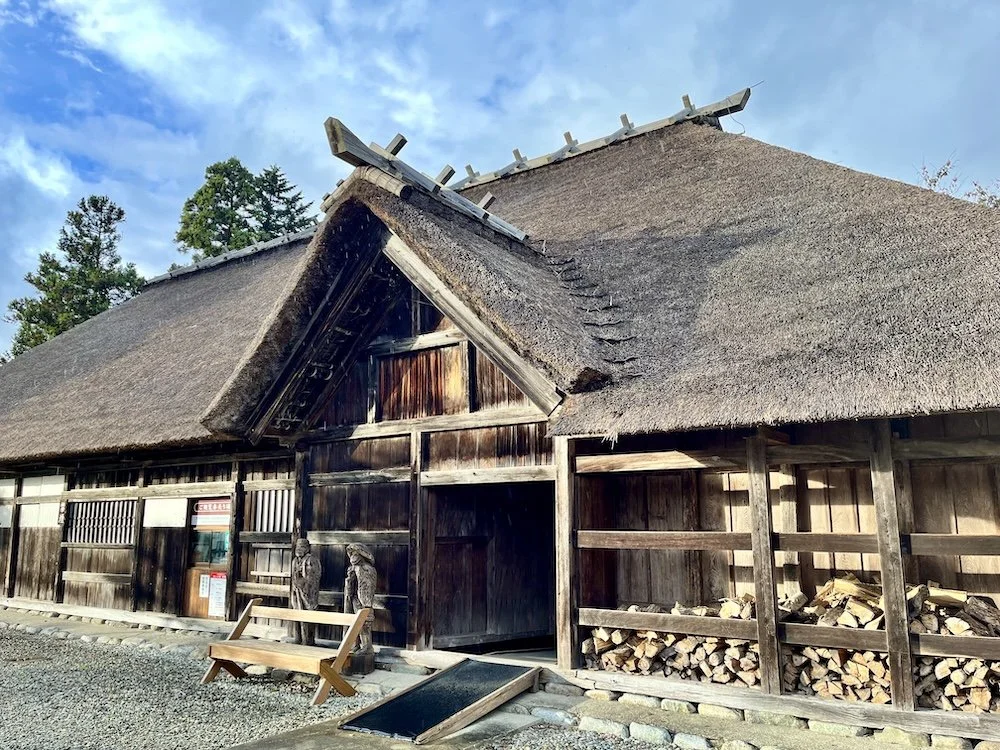
Basho and Sora spent some nights at this station master’s house, now a museum.

“a banana tree” - Bashō adopted his pen name from the banana tree, or bashō, outside his hut. A cluster of banana trees grows near the entrance to the Bashō museum in Yamadera.

“straw sandals” - For their journey of 1500 miles, mostly on foot, Bashō and Sora wore sandals made of rice straw. These wore out out so quickly that they had to be replaced every day.

“steaming onsen” - Japan is famous for its many onsen, or hot springs. The traditional Japanese hotels on our walking tour all had onsite onsen—a great treat after hiking up to ten miles.

_________________________

Thanks for coming along! For more details and photos of the trip, booked via Walk Japan, see my blog post, Three wayfarers in Japan.

Makino Studios News

Summer sale: Take 15% off all cards in the Makino Studios shop until midnight this Monday, August 3 with code SUMMER2026. And check out the new bestseller bundles for birthdays, sympathy and everyday (6 cards for the price of five).

2027 calendar focus group: I’ve been working hard on the collages for my 2027 mini-calendar of art and haiku! I could use some feedback on which image to use for the cover and which pieces to leave out entirely. If you’re interested in getting a sneak peek online and voting on the options, please email me (see page footer). And if you were part of last year’s focus group, I’ll include you again. Thanks!
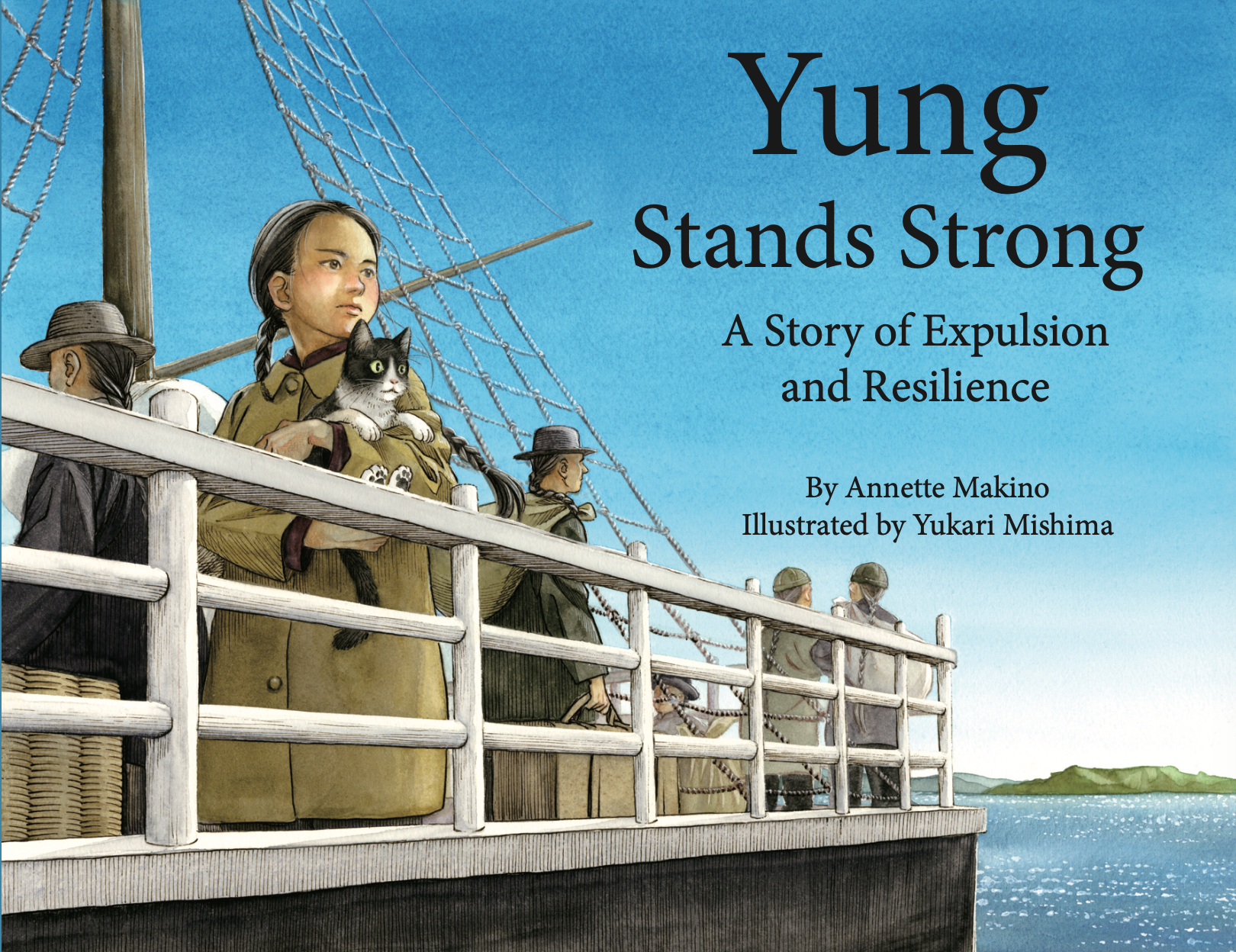
Yung Stands Strong: After months of research, writing, and editing, the children’s book I’ve written in collaboration with Humboldt Asians and Pacific Islanders in Solidarity (HAPI) is finally finished! With beautiful illustrations by Yukari Mishima and an in-depth historical section, this book about the 1885 expulsion of the Chinese population from Eureka, CA,  goes to the printer tomorrow. We expect to have books in hand by the beginning of October. The books run 50 pages (half story, half historical background) and will cost $20. If you expect to buy more than a couple of copies, please let me know ASAP, as we are still figuring out the right quantity to print!

Obon Festival: Local Humboldt folks, I hope to see you at Humboldt’s fifth annual traditional Japanese celebration of our ancestors 3-7 p.m. on Sunday, August 16 in the Arcata, CA, Creamery District. Bon folk dancing, taiko drumming, Asian food vendors, crafts, kids activities and an ancestor shrine await you. I’m honored that this year’s posters, t-shirts and sweatshirts feature one of my mixed media collages. More info from HAPI.

Seabeck Haiku Getaway: For those who will be at the Seabeck Haiku Getaway in Seabeck, WA in late October, I plan to attend and give a presentation, with haiku and photos, on walking part of Bashō’s route.

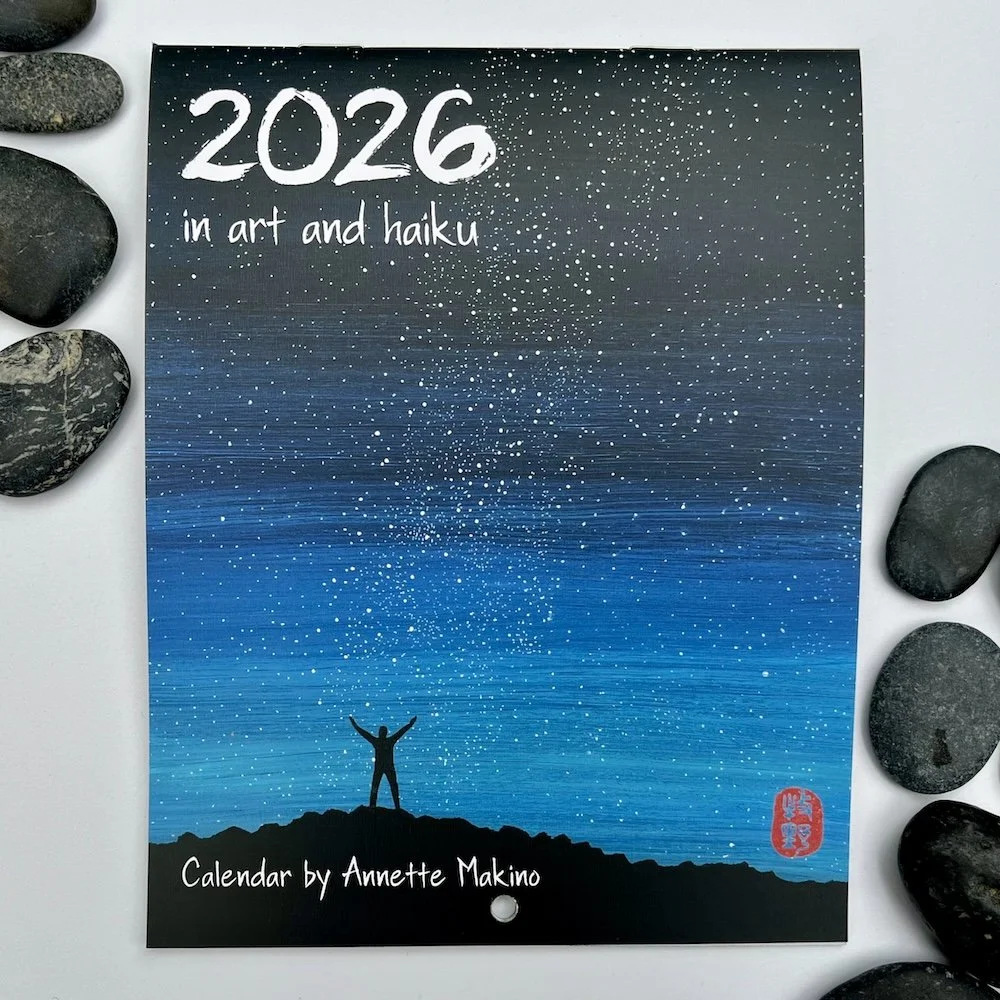
How a haiku is hatched

spiral journal this bit of the galaxy

This mixed media collage is 11×14, made with acrylic paint, paper and glue on cradled wood. © Annette Makino 2025

It was almost midnight on February 18, 2023. My back was injured from repeatedly picking up our elderly dog Misha. I was lying in bed with one of the large spiral-bound notebooks I use for journaling. Feeling sore and tired, I didn’t have anything profound to say, so I just wrote about the moment: journaling about my wee life despite my stunning insignificance in the grand scheme of things. The first draft read:

spiral notebook
these random jottings in this bit
of galaxy

This felt very awkward, but it had potential. I cut “these” but it was still clunky. Next I tried:

spiral notebook
recording my small part
of the galaxy

I crossed out “small” but it still seemed too long and too obvious. I gave up for the time being.

The next day, I came back to it with fresh eyes. Changing “notebook” into “journal” covered the journaling aspect without having to detail it. And instead of hitting readers over the head with my point, the new, condensed version gave them a little something to work out. I changed “part” for “bit” because it sounded smaller.

The haiku was now so short that I thought it worked better as a one-liner, or “monoku.” In English-language haiku, this is a popular variation from the typical three lines. The poem now read:

spiral journal my bit of the galaxy

Three weeks later, I submitted it to the esteemed journal Modern Haiku, and happily, editor Paul Miller accepted it for the summer 2023 edition.

Last month, while perusing my haiku collection to find good subjects for haiga (art combined with haiku), this one spoke to me. But I’d noticed that many of my poems are in the first person. For pieces that will go into my annual calendar, I worry that too many “I” poems could seem too self-involved; I would rather include the reader. So for the haiga version, I changed “my” to “this.”

Now I wonder if my meaning is less clear in this version, but I guess that’s OK; each reader can interpret it as they wish. There are plenty of haiku that I find mysterious but interesting, as long as they aren’t completely obscure.

The art came together quickly using acrylic paint, paper I had painted black and archival white and silver gel pens for the gazillion stars. In my informal focus group last month, this simple but powerful image (without the words) was the top choice for the cover of my 2026 calendar. It’s also the featured art for November.

Oy vey, that was a lot of verbiage about a seven-word haiku! You can see how much effort can go into this shortest form of poetry. It reminds me of the 1657 quote from Blaise Pascal, often misattributed to Mark Twain: “I would have written a shorter letter, but did not have the time.”

I guess I buried my lede: the 2026 Makino Studios calendar of art and haiku is back from the printer and available online! These will make their way into local stores over the next couple of months. I’m really happy with this collection of twelve new mixed media collages and I hope you enjoy it.

Makino Studios News

SALE! 2026 mini-calendar of art and haiku - Japanese-inspired collage - 913
Sale Price: $6.00 Original Price: $12.00

Featuring peaceful landscapes and animals, this wall calendar expresses Zen wisdom as well as quiet wonder and delight in the world.

The Japanese-inspired collages in this calendar include haiku by award-winning poet and artist Annette Makino. She created each of these collages with hand-painted washi papers from Asia as well as found papers.

This mini-calendar measures 5-1/2” wide by 7” tall closed (or 5-1/2” x 14” open), so it will easily fit in a small space. Major US holidays are listed. All twelve designs are shown on the back. The calendar includes an artist’s bio and some background on haiku and haiga (haiku art).

These are professionally printed in the USA on substantial paper and saddle-stitched. Each calendar is packaged in a self-sealing cellophane sleeve.

Many users of past Makino Studios calendars save and hang up each month’s painting after it has passed or give the image to a friend. The new calendar makes a great gift that may continue to bring pleasure well past 2026.

NEW! 2026 calendar: Featuring peaceful landscapes and animals, my 2026 mini-calendars of art and haiku are still just $12 each, same as the first one in 2013. These little calendars of my mixed media collages make great gifts for friends and family.

NEW! Holiday notecard sets: I’ve designed two new notecard sets for the holidays: one featuring the galaxy art above and reading “PEACE”, and another with a happy dog reading “joy to the world.” I also offer several other notecard sets for everyday and holidays. A box of eight cards with kraft envelopes is $20.

NEW! Custom cat print: By customer request, I’m offering custom prints of a tuxedo cat catching falling leaves, printed to order in several size options. You can browse all my prints here. Let me know if you have a favorite piece not shown that you’d like to order as a print.

Haiku North America: I’m really looking forward to this bi-annual gathering of haiku poets in San Francisco Sept. 24-28. I will read a few of my poems as part of one session and my books, calendars, notecard sets and art will be available for sale at the conference.

Journey to Japan: I’m heading to Japan Oct. 13-30! The trip will include a six-day walking tour in northern Honshu, following in the footsteps of famed haiku poet Basho and his disciple Sora, who spent five months in 1689 walking there; the trip resulted in Basho’s seminal book of haibun and haiku, Narrow Road to the Deep North.

Makino Studios orders will be on break: Makino Studios orders will not be shipped during my two trips. I am sorry for the inconvenience.